Key Takeaways
- A standard shoot day covers about five script pages, or 40 eighths of a page.
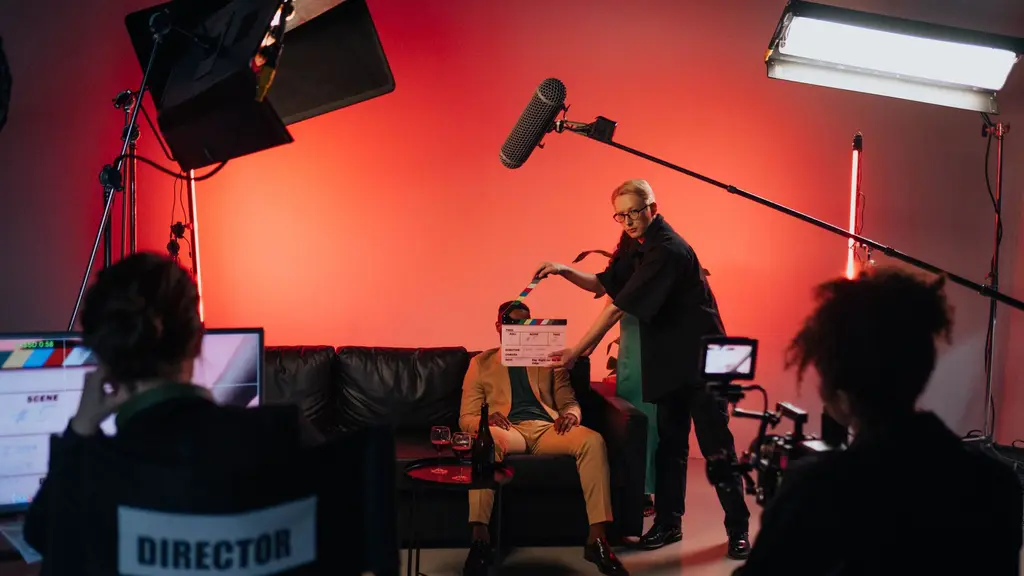
- The director's primary responsibility on set is to protect the vision while managing the physical constraints of the schedule.
- Effective blocking establishes the spatial relationship between characters and dictates the camera's movement.
- A well-prepared shot list is the most effective tool to prevent over-shooting and save budget.
- The 1st Assistant Director is the director's primary partner in maintaining the daily production schedule.
It is 4:00 PM. The sun is dipping below the horizon, you are three pages behind schedule, and the lead actor just told you they’re exhausted. This is the moment where the "vision" stops mattering and the math takes over. If you don't know exactly what you need to capture before the clock hits your 12-hour mark, you aren't directing a film; you’re just paying for an expensive disaster.
Filmmaking isn't about the philosophy of the frame. It’s about managing a thousand compromises without losing the core of the story. You have a budget, a crew that needs their turn-around time, and a script that dictates your pace. A standard professional screenplay page equates to one minute of screen time. If your script is 90 pages, you have 90 minutes. In the reality of an independent project, you might be aiming for 30 to 60 days of shooting. Every page you don't finish today is a page that steals time from tomorrow. You must treat every minute of light as a non-renewable currency; once you lose an hour to a disorganized setup, you are effectively paying the crew for hours of lost productivity.
The Director's Role in Pre-Production#
Pre-production is where you win the war. If you step onto a set without a locked plan, you are gambling with other people's money. Your job here isn't to dream; it’s to build a technical blueprint. You need to identify every location, every prop, and every beat of the performance. If you aren't sure how a scene ends, don't shoot it. The confusion will manifest in your dailies, and by then, the cost to fix it is triple.
You need to know your hierarchy. In the Indian production model, the 1st AD is your best friend—they manage the schedule and keep the train moving. The 2nd AD handles the cast and crowd, while the 3rd AD deals with the ground-level continuity and set operations. If your 1st AD tells you the schedule is crumbling, you listen. You don't ask for "one more take" unless it’s for a mission-critical beat. A classic example of failure is the "ego take," where a director demands ten extra minutes for a performance tweak that doesn't actually change the scene’s outcome, subsequently forcing the crew into an overtime hour that costs the production thousands in penalty fees. You must use tools like Celtx or Final Draft to tag elements, then import those into scheduling software like StudioBinder or Movie Magic Scheduling to ensure every prop is on the truck and every actor is cleared for their call time. If you don't have a color-coded stripboard, you are flying blind.
THE DUST BETWEEN US
Written by Rohan Varma
Production Draft — 14 Oct
In Scriptory: Title Page
A correctly laid-out title page that travels with the script into every export.
Where: Editor — Title page panel
Breaking Down the Script for the Shoot#
You have to tear the script apart to understand the physical requirements. A scene might look simple on the page, but if it requires a 3-point lighting setup, a specific prop move, and a complicated transition, it isn't a quick setup. You have to account for every minute. Remember, a 12-hour day isn't 12 hours of filming. You lose 45 to 60 minutes for a mandatory lunch after the 6th hour. That isn't a suggestion; it’s a labor law and a survival necessity.
If you don't break the script down into scene numbers and categorize your requirements, you will forget to shoot the inserts or the reaction shots that bridge your edits. Map your day by the complexity of the lighting and the movement of the camera. If you have a Steadicam long take—think of the Copacabana entrance in Goodfellas—that is a half-day's work just to block and light. Don't schedule it next to a ten-page dialogue scene. When you break down a scene, ask: How many pages of dialogue? How many actors? Are we outdoors or indoors? Outdoor scenes require constant monitoring of the sun’s position using apps like SunSeeker; failing to track the sun means you will have continuity errors where the shadows jump between two sentences of dialogue, forcing a expensive re-shoot or a costly digital shadow-match fix in post-production. Every piece of equipment, from your ARRI lights to your C-stands, must be logged in a breakdown sheet to prevent the "gear wait" where your highly-paid crew sits idle for thirty minutes because a specific modifier or grip tool wasn't flagged for the shoot day.
The Production Workflow
- 1
Tag your script
Identify every prop, character, and location in the text.
- 2
Number your scenes
Never refer to scenes by name; use numbers for call sheets.
- 3
Build the stripboard
Arrange the scenes to minimize company moves.
- 4
Plan your master
Always start with the master shot to secure the safety coverage.
Blocking and Camera Placement Basics#
Blocking is the physical architecture of your scene. If you ignore the 180-degree rule, you create a jarred, disorienting experience for the viewer. You’re telling the audience where to look, and if you flip the spatial relationship between two characters without a clear motivation or a camera move to justify it, you lose them.
Start with the master shot. It covers the entire action and gives you a safety net. Once the master is in the can, you move to coverage—your close-ups, your over-the-shoulders, and your inserts. Do not get greedy. If you shoot 40 angles for a two-minute scene, you are creating "coverage paralysis" for yourself in the edit. You’ll spend three weeks trying to stitch together a coherent performance because you didn't have a clear plan for how the scene would cut. Use a top-down floor plan—either drawn by hand or using specialized software—to dictate where the actors stand. When you mark the floor with T-marks for your actors, you aren't being rigid; you are ensuring that the camera focus puller knows exactly where the actor will be. If an actor drifts three feet off their mark, the shot is soft, the focus puller fails, and you have to do another take. By locking the blocking in rehearsals before the camera rolls, you shave 15 to 20 minutes off every setup, which, over the course of a 30-day shoot, adds up to an entire extra day of production time.
Managing the Set and Crew Hierarchy#
You are the creative center, but the Line Producer is the gravity. They control the budget. They know exactly how much the gear, the catering, and the overtime cost. If you push for another hour, you aren't just pushing the crew; you are burning through the contingency budget. Respect the turnaround time—the required rest period between days—unless you want a tired crew making dangerous mistakes with heavy lights.
The Executive Producer handles the money, and they rarely care about your vision if you are over budget. Your relationship with the crew is symbiotic. If you treat your Art Director with respect and give them the time they need to set a frame, the production value will skyrocket. If you rush them, you end up with a set that looks like a cheap stage play. A common mistake is failing to build a "buffer" into the schedule for the Art Department. If you have a scene involving a complex transformation or a specific set dressing requirement—like breaking a window or rearranging furniture—you must allocate "pre-light" or "pre-set" time before the actors arrive. If you neglect this, your expensive lead actors will be sitting in their trailers on the clock while your crew scrambles to tape down cables or fix a prop, which is a hemorrhage of your budget that could have been avoided with a simple, scheduled "set-dressing block."
The Chain of Command
Directing Actors: Beyond the Dialogue#
Stop telling actors how to say a line. They know how to speak. Tell them what the scene is about. Give them an objective. If you tell an actor, "Say this angrily," you get a generic performance. If you tell them, "You are trying to get this person to admit they lied so you can feel justified in leaving," you get a performance.
Directing is about removing the barriers between the actor and the truth of the moment. If the scene feels artificial, look at the blocking. Is the camera making them feel exposed? Is the lighting too harsh? Sometimes, the problem isn't the acting; it’s the environment. Ensure they have a space to breathe before the slate drops. Great performances, like those we see in Catch Me If You Can, rely on that emotional resonance anchored in a very specific set of circumstances. Use techniques like the Meisner repetition or simply asking the actor, "What does your character want right now?" If they can't answer, your script is too vague. When the actor struggles, it’s rarely because they lack talent; it’s usually because you, the director, haven't provided the necessary internal stakes. Spend your prep time writing character bios that detail the "hidden" history of the scene—what happened five minutes before the cameras rolled—so the actors can step onto the set with an active, burning motivation rather than waiting for your external direction.
Scriptory Resource
Need to organize your script?
Stop wrestling with spreadsheets. Tag characters, props, and locations directly in your script and generate instant breakdowns.
The Importance of Coverage and Continuity#
If you shoot a scene out of order, you must track continuity. If your character is holding a cigarette in the master shot, they better be holding it in the close-up. If you fail to track this, you will find yourself in the edit suite with a jump-cut that destroys the reality of the scene.
Coverage isn't just about getting different angles; it's about giving yourself options in the edit. Use a match cut if you want to transition between time periods without losing the audience's attention, similar to how Spielberg handles time in his projects. But keep the plan simple. You need the master, the medium, and the close-up. Anything else is a luxury you probably can't afford. A vital tool here is the "Script Supervisor’s Log." This document tracks everything from the slate number to the lens focal length and the specific emotional beat of each take. If you skip this, you are throwing away your roadmap. When you are in the edit, you will be hunting for a specific "eye line match." If the character looked screen-left in the master shot but the actor looked screen-right in the close-up due to a lack of continuity oversight, the cut will feel jarringly fake. Don't rely on your memory; rely on the script notes, the continuity photos, and the slate-to-slate documentation.
| Shot | Size | Angle | Description |
|---|---|---|---|
| 1A | WS | High | Wide, establishes the 180-degree line |
| 1B | MCU | Eye | Medium close-up on Hero, tracking intent |
| 1C | CU | Low | Over-the-shoulder on Villain, reaction |
In Scriptory: Shot Lists
Shot size, angle, movement and lens per scene, with a starter list the AI can propose one scene at a time.
Where: Editor — Storyboard tab
Navigating Post-Production as a Director#
The cut is where the movie is born. You will find that some of your favorite shots don't work. The performance you thought was brilliant on set might feel flat when juxtaposed against a different take. This is where the Auteur Theory comes into play—it's your vision, but you have to be willing to kill your darlings.
Remember that the legal reality of a 'Director's Cut' is often a fantasy. Unless you have specific leverage, the studio or the producers usually hold the final cut rights. Your goal during the edit is to protect the emotional arc of the characters. If the pace drags, cut the dialogue. If the audience is confused, re-examine the master shot. Post-production is a technical process of refining the truth you captured on set. If you didn't capture the truth on set, no amount of editing will save you. Editing is where the "second script" is written—the rhythm of cuts, the use of silence, and the strategic deployment of sound design. If your scene lacks tension, look at the "dead space" before and after the dialogue. Often, simply cutting the air between two lines of dialogue can transform a scene from a sluggish exposition dump into a high-stakes, breathless encounter. You must be ruthless with your footage; keeping a shot because it "looks pretty" while it destroys the pacing of the entire act is the mark of an amateur. Your job is to serve the narrative, not your vanity.
Essential Post-Production Prep
0% CompleteYour next move is to look at your script and ask yourself which scenes are truly necessary. Then, take those pages and map them to a physical shooting schedule. Do not add a scene because it looks cool; add it because it moves the story forward. Stop worrying about the "aesthetic" and start worrying about the clock. You have a film to make. Start by securing your master shot for the first scene, and don't move on until you know you have the edit in your head. Every choice you make from this point forward must be weighed against the ticking clock of your production schedule; if it doesn't serve the story, it’s noise. Focus on the core, manage the variables, and remember that a film is not finished when you yell "cut," but when the audience understands the journey you set out to build in those first, frantic hours of prep.
Frequently Asked Questions
Quick answers to what people ask about this topic.
What is the most important task for a director on set?
The most important task for a director is to maintain the creative vision while ensuring the production stays on schedule. This involves clear communication with the Department Heads, making decisive choices during blocking, and ensuring the actors understand their emotional objectives for every take.
How do I start directing my first independent film?
Start by mastering the script breakdown process, which involves identifying every requirement for each scene, from props to camera angles. Once you have a clear plan, focus on building a reliable crew and creating a shot list that prioritizes the essential story beats over unnecessary complexity.
What is the 180-degree rule in film directing?
The 180-degree rule is a cinematography guideline that states two characters in a scene should maintain the same left/right relationship to each other. By keeping the camera on one side of an imaginary axis, you ensure the audience remains oriented and does not become confused by the spatial layout of the scene.
How many pages of a script should I shoot per day?
A standard professional shoot day typically covers between 3 to 5 pages of a script. However, this varies significantly based on the complexity of the scenes, the number of setups required, and the experience level of your crew. Always prioritize quality over quantity when working with limited resources.
Format your script for free
Stop fighting Word margins. Scriptory formats your screenplay to industry standard as you type, then turns it into a breakdown, a schedule and a call sheet.
Open Scriptory Now