Key Takeaways
- Francis Ford Coppola has directed 24 feature-length films spanning over six decades of American cinema.
- His feature directorial debut was the 1963 low-budget horror film Dementia 13.
- You're a Big Boy Now served as Coppola's thesis project for his Master's degree at UCLA.
- Coppola frequently revisits his catalog, releasing alternative cuts like The Godfather Coda and The Cotton Club Encore years after initial release.
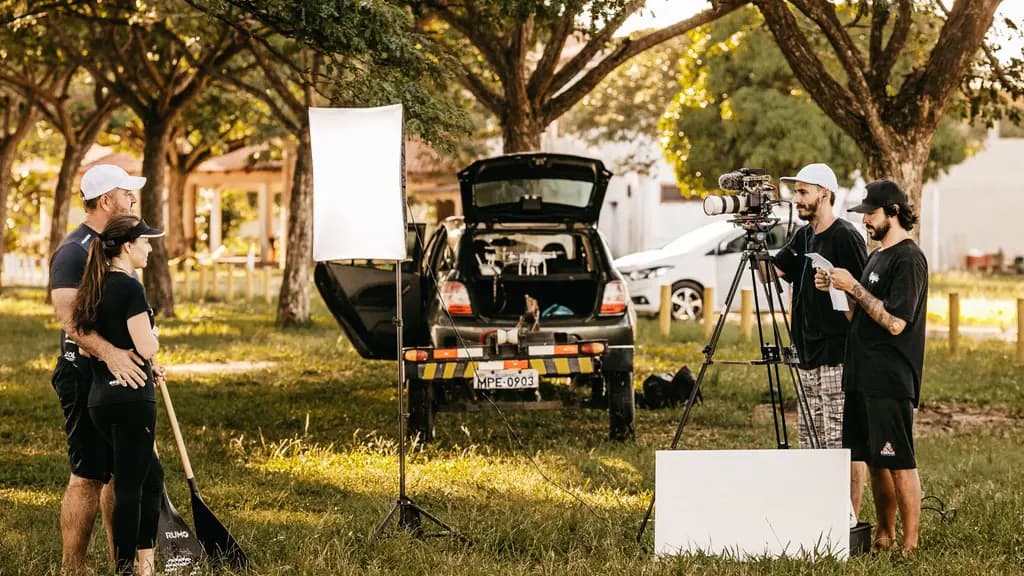
You know how a 12-hour day on set ends. The grip truck is gone, the grip tape is peeling off the apple boxes, and you are staring at a hard drive full of footage wondering if any of it actually means anything. Francis Ford Coppola has been chasing that exact feeling for six decades. Most directors get a couple of hits and settle into a comfortable groove of studio-approved compromises. Coppola spent his own money, blew up his own budgets, and built an entire career out of taking the most reckless swing possible on every single setup.
Evaluating Francis Ford Coppola's complete 24-filmography reveals how independent financing and constant re-editing shaped a career defined as much by glorious financial failures as immortal masterpieces. We treat auteur filmographies as uniform in quality rather than recognizing the erratic swings between commercial flops and masterworks. You cannot look at The Godfather without looking at the bankruptcy notices that followed. You cannot understand Megalopolis without tracing the lineage back to a soundstage in Las Vegas where a romantic musical nearly swallowed a studio whole.
Let’s walk through all twenty-four features. No padding, no nostalgia, just twenty-four films that prove what happens when an artist refuses to color inside the lines.
24. Jack (1996)#
Francis Ford Coppola’s worst movie is genuinely, bewilderingly insane. The film follows a ten-year-old boy named Jack who looks like a forty-year-old man because of an extreme aging disorder. Robin Williams plays the lead, towering over his classmates while wearing a kid's blazer and sobbing about playground dodgeball.
Williams tackles the emotional isolation with total commitment, but the tone lurches wildly between a slapstick family comedy and a tragic medical drama about progeria and rapid cardiovascular decline. You are watching a master filmmaker struggle to find a foothold in a script that has no business existing. It earned dismal notices and remains a cautionary tale about what happens when pedigree meets pure commercial calculation.
23. Twixt (2011)#
Val Kilmer plays a washed-up horror writer touring small towns to hawk bargain-bin paperbacks. He stumbles into a murder mystery involving a local sheriff, a coven of vampires, and the literal ghost of Edgar Allan Poe. It looks like it was shot on a digital camera in someone's backyard, because essentially, it was.
Coppola toured with the film during its initial release, live-editing scenes in front of audiences like a mad DJ spinning records at three in the morning. He later recut it into B'Twixt Now and Sunrise in 2022. The digital framing is gauze-heavy and aggressive, turning what should be a pulpy genre exercise into an experimental home video.
22. Youth Without Youth (2007)#
After a ten-year directing hiatus, Coppola returned with this dense adaptation of a Mircea Eliade novella. Tim Roth stars as an aging linguistics professor who gets struck by lightning and miraculously starts growing younger while gaining telepathic powers and the ability to absorb ancient languages instantly.
It is a gorgeous picture shot by Mihai Mălaimare Jr., but it suffers from a fatal lack of pulse. You can see the ambition in every frame, yet the narrative weight of a man hiding from Nazis while translating the origins of human speech gets buried under layer after layer of philosophical throat-clearing. It is a technician's puzzle box that forgets to engage the human nervous system.
21. New York Stories (1989)#
An anthology film is a collaborative gamble where multiple directors take a single overarching theme and break it into separate short features. This one paired Martin Scorsese, Woody Allen, and Coppola. Scorsese delivered a masterclass with "Life Lessons," and Allen brought dry wit with "Oedipus Wrecks."
Coppola contributed "Life Without Zoë," a bizarre, weightless vignette about a precocious rich kid living in a grand Manhattan hotel. It feels utterly detached from the grit of the other two segments. The trio failed to establish a unified aesthetic or thematic throughline, leaving the project feeling more like a contractual obligation than a cohesive portrait of a city.
20. Gardens of Stone (1987)#
Most Vietnam War dramas spend their runtime in the mud and the choppers. Gardens of Stone stays stateside. James Caan stars as an old-school Army sergeant assigned to the 3rd Infantry Regiment, known as "The Old Guard," whose primary duty is burying soldiers returning from the front in Arlington National Cemetery.
It is a quiet, somber film about military grief that played to empty houses, grossing less than half its production budget. Caan brings a tired, weathered authority to the screen, but the film lacks the visceral punch of Coppola's earlier war masterworks, settling instead for a respectful, mournful elegy.
19. Finian’s Rainbow (1968)#
Fred Astaire is pushing seventy, dancing on dirt mounds in a fictional state called Missitucky, and trying to bury a crock of stolen gold near the end of a rainbow. It sounds like a fever dream, but it was a major studio musical released right at the death rattle of the Hollywood Golden Age.
Coppola inherited the gig and managed to inject a surprising amount of social commentary regarding racial integration into the colorful song-and-dance numbers. It was a commercial success that earned two Academy Award nominations, proving the young director could handle massive studio machinery before he tore it all down to make personal art.
18. Peggy Sue Got Married (1987)#
Kathleen Turner plays a woman on the verge of a messy divorce who faints at her high school reunion and wakes up back in 1960 as a teenager with all her adult memories intact. It had an $18 million budget, a soundtrack full of period needle-drops, and a heavy dose of John Hughes-style adolescent angst.
The studio got a massive hit that grossed more than double its budget, and Turner earned an Academy Award nomination for Best Actress. Coppola also managed to pack the cast with family members, including a young Nicolas Cage doing an aggressively strange vocal impersonation that nearly got him fired during the first week of production.
17. The Cotton Club (1984)#
The real-world Harlem Renaissance landmark was a segregated den of jazz and organized crime. Coppola’s cinematic recreation is a sprawling, wildly expensive gangster melodrama starring Richard Gere as a cornet player who falls for Diane Lane.
The behind-the-scenes chaos involved competing mob financiers, exploding budgets, and bitter crew walkouts. The theatrical cut suffered from studio interference that chopped out vital narrative connective tissue. In 2017, Coppola went back to the vaults and released an extended director's cut titled The Cotton Club: Encore, restoring the musical numbers and character beats that the original bean-counters cut away.
16. You’re a Big Boy Now (1966)#
Long before the studio suits handed him the keys to the Corleone family, Coppola adapted David Benedictus’s novel as his thesis for a Master’s degree from UCLA’s School of Theater, Film and Television. It is a frantic, jazz-infused coming-of-age comedy shot on the actual streets of New York City with handheld cameras and frantic jump cuts.
Geraldine Page earned an Oscar nomination for her blistering performance as an overbearing mother. The film is a raw, energetic time capsule of mid-sixties counterculture that earned its director his degree and set his career blazing.
15. The Rain People (1969)#
Shirley Knight plays Natalie, a pregnant housewife who packs a suitcase, climbs into a station wagon, and drives across America to escape her domestic life. Along the way, she picks up Killer, a brain-damaged former college football player played with terrifying vulnerability by James Caan.
Coppola packed his crew into vans and shot on location across several states, capturing a genuine sense of American aimlessness. There is an agonizing, quiet sadness running through every frame of the picture that separates it from the slick studio product being pumped out of Hollywood at the end of the decade.
14. Dementia 13 (1963)#
Roger Corman gave a twenty-three-year-old Coppola a few thousand dollars and a leftover crew in Ireland with one simple instruction: make a cheap horror movie with an axe murder in the first ten minutes.
Coppola wrote and directed Dementia 13, following a scheming young widow trying to secure her dead husband's inheritance from a creepy aristocratic family living on an isolated Irish estate. It is rough around the edges, loaded with jagged editing choices and gothic atmosphere, but it stands as his first official directorial feature and a clear signal that he knew how to stretch a dollar until it screamed.
13. One from the Heart (1982)#
Coppola built an entire miniature Las Vegas on a massive soundstage at his own Zoetrope Studios, complete with neon streets, flashing lights, and computerized camera systems. The plot follows a couple arguing on their anniversary and seeking romance elsewhere, but the story is completely secondary to the sheer audacity of the production design.
The film flopped so catastrophically at the box office that it bankrupted Zoetrope and forced Coppola into decades of work-for-hire studio directing just to pay off his debts. Yet as a visual playground of practical lighting and set construction, it remains a staggering monument to hubris.
12. The Outsiders (1983)#
S.E. Hinton’s seminal young adult novel about the Greasers and the Socs in Tulsa, Oklahoma got the full cinematic treatment courtesy of a cast that reads like a casting director's fever dream of future superstars: Tom Cruise, Patrick Swayze, Matt Dillon, Rob Lowe, Emilio Estevez, and Diane Lane.
Coppola leans heavily into romanticized melodrama, painting the sunsets with deep oranges and golds while teenage boys scrap in vacant lots. It is earnest, slightly cheesy, and undeniably potent for anyone who ever felt like an outcast in high school.
11. Megalopolis (2024)#
Decades in the making and funded entirely out of his own pocket using proceeds from his California winery empire, Coppola's self-funded passion project explores utopian urban planning, classical philosophy, and the fall of modern civilization. Adam Driver plays Cesar Catalina, an architect who can stop time and wants to build a futuristic city out of a sustainable material called Megalaton.
The film is an overstuffed, chaotic mess of ideas, borrowing heavily from Cicero and the Roman Republic while utilizing live actors on stage interacting with the movie screen. Critics were deeply divided, but whether it succeeds or fails, it is the purest distillation of an auteur spending every cent he has earned to say exactly what he wants.
10. Rumble Fish (1983)#
Shot back-to-back with The Outsiders, this second S.E. Hinton adaptation threw commercial viability out the window in favor of pure stylistic expression. Rendered in high-contrast black and white cinematography—with the sole exception of the titular Siamese fighting fish glowing in vibrant red and blue—the film follows the tragic relationship between a deaf-mute neighborhood leader known as the Motorcycle Boy and his impressionable younger brother.
Mickey Rourke delivers an iconic performance that anchors the surreal, expressionistic imagery. It is a moody, poetic tone poem about juvenile delinquency that tanked with mainstream audiences and earned a rightful spot in the pantheon of cult classics.
9. Tucker: The Man and His Dream (1988)#
Preston Tucker wanted to build the car of tomorrow today: a sleek, innovative family vehicle featuring a center headlight that turned when you steered, rear-engine design, and advanced safety features. Detroit’s Big Three and the federal government crushed him for it.
Coppola treats Tucker’s crusade as a direct mirror of his own battles with the studio system. The period detail, costume design, and production design are immaculate, capturing the bright-eyed optimism of postwar America colliding with cold corporate corruption. It is one of his warmest, most accessible crowd-pleasers.
8. The Godfather Part III (1966) / The Godfather Coda (2020)#
For decades, the final chapter of the Corleone saga was treated as a massive creative misfire. Al Pacino returned as an older, greying Michael Corleone attempting to legitimize his family's empire through Vatican real estate deals, but the film struggled under the weight of uneven performances, most notably Sofia Coppola stepping in at the last minute to play Mary Corleone.
priest cassock and bank ledger are tagged.
MICHAEL CORLEONEJust when I thought I was out... They pull me back in.
In Scriptory: Script Breakdown
Tag props, cast, costume, vehicles, stunts and SFX on the page itself, then read them back grouped by department and by scene.
Where: Editor — Breakdown tab
In 2020, Coppola recut the film, trimming the fat, altering the opening and closing beats, and releasing it under its original intended title: The Godfather Coda: The Death of Michael Corleone. It does not erase the narrative stumbles, but as a quiet, tragic denouement for a ruthless monster begging for absolution, it finally makes narrative sense.
7. Tetro (2009)#
Shot in luminous black and white across the sun-bleached alleys of Buenos Aires, Tetro is a deeply personal, family-focused melodrama about an aspiring young writer who visits his estranged, emotionally volatile older brother—a failed artist hiding out in Argentina.
Alden Ehrenreich and Vincent Gallo carry the heavy emotional lifting. The film utilizes striking color-flashback sequences to break up the monochromatic present, exploring sibling rivalry, paternal abuse, and the terrifying burden of artistic legacy. It is a criminally overlooked late-career gem.
6. The Rainmaker (1997)#
John Grisham adaptations were a dime a dozen in the nineties, but Coppola turned this legal thriller about an earnest young lawyer taking down a corrupt insurance company into something genuinely human and grounded.
Matt Damon plays Rudy Baylor with a quiet, scrappy desperation, backed by a fantastic supporting turn from Danny DeVito as his cynical paralegal. There are no flashy courtroom pyrotechnics here; Coppola focuses on the dirty, small-scale logistics of pro bono work and insurance fraud, delivering his most satisfying mainstream genre picture in decades.
5. Bram Stoker’s Dracula (1992)#
Rejecting the drab CGI landscapes of modern horror, Coppola insisted on building the terror of Bram Stoker's Dracula entirely through practical effects. Every optical illusion, rear-projection trick, shadow manipulation, and theatrical costume design was executed in-camera on a closed soundstage.
Gary Oldman chews through the scenery with terrifying, tragic grace as a vampire crossing oceans of time to find his lost love. The film is a hyper-sensory, erotic explosion of gothic design that completely redefined how studios approached classic literary monsters.
4. The Conversation (1974)#
Released between the first two Godfather films, this paranoid thriller follows Harry Caul (Gene Hackman), a deeply Catholic, obsessively private surveillance expert who records a young couple walking through Union Square in San Francisco. When Harry becomes convinced the couple will be murdered, his professional detachment crumbles into sheer terror.
The sound design by Walter Murch is a masterclass in subjective storytelling, placing the viewer inside the murky audio loops of intercepted wiretaps. It won the Palme d’Or at Cannes and remains a chilling, clinical examination of guilt, privacy, and modern paranoia.
Scriptory Resource
Tag your script instead of retyping it
Scriptory pulls props, cast and locations straight off the page.
3. Apocalypse Now (1979)#
The production of Apocalypse Now is legendary for its disasters: typhoons destroying sets, heart attacks on location, lead actors being recast, and a budget spiraling completely out of control while Coppola mortgaged his own home to keep cameras rolling in the Philippine jungle.
The resulting Vietnam War epic follows Martin Sheen’s Captain Willard upriver on a classified mission to terminate Colonel Kurtz (Marlon Brando), descending steadily into a psychedelic heart of darkness. Storied cinematography by Vittorio Storaro turns napalm explosions and burning French colonial plantations into high art. It is a monument to stubborn, obsessive filmmaking.
2. The Godfather Part II (1974)#
Sequels are usually cynical cash grabs designed to milk a recognizable intellectual property. Coppola took the studio up on their offer and delivered a twin masterpiece that functions simultaneously as a prequel exploring Vito Corleone’s rise through turn-of-the-century Little Italy and a sequel tracking Michael’s moral collapse in the late fifties.
Robert De Niro and Al Pacino never share a frame, yet their dual portraits of generational corruption anchor the grandest crime saga in American film history. It swept the Academy Awards and proved that sequels could surpass originals when guided by uncompromising vision.
1. The Godfather (1972)#
The studio wanted a quick exploitation flick. Paramount executives fought Coppola every step of the way over casting Marlon Brando and Al Pacino, demanding shorter scenes, brighter lighting, and faster pacing. Coppola stood his ground, capturing the dark, amber-lit interiors of Corleone compounds and wedding receptions with Gordon Willis.
It remains the absolute peak of American narrative cinema—a monumental tragedy about immigration, capitalism, and family loyalty wrapped inside a genre package. It changed the industry forever, launched Coppola into the stratosphere, and set a standard that no filmmaker has managed to top in the fifty years since.
Complete Filmography Summary#
- The Godfather (1972)
- The Godfather Part II (1974)
- Apocalypse Now (1979)
- The Conversation (1974)
- Bram Stoker's Dracula (1992)
- The Rainmaker (1997)
- Tetro (2009)
- The Godfather Part III / The Godfather Coda (1990/2020)
- Tucker: The Man and His Dream (1988)
- Rumble Fish (1983)
- Megalopolis (2024)
- The Outsiders (1983)
- One from the Heart (1982)
- Dementia 13 (1963)
- The Rain People (1969)
- You're a Big Boy Now (1966)
- The Cotton Club (1984)
- Peggy Sue Got Married (1987)
- Finian's Rainbow (1968)
- Gardens of Stone (1987)
- New York Stories (1989)
- Youth Without Youth (2007)
- Twixt (2011)
- Jack (1996)
Frequently Asked Questions
Quick answers to what people ask about this topic.
How many feature films has Francis Ford Coppola directed?
Francis Ford Coppola has directed 24 feature-length films throughout his career. While he is globally famous for masterpieces like The Godfather and Apocalypse Now, his filmography ranges from low-budget 1960s horror to massive self-funded epics like Megalopolis.
What was Francis Ford Coppola's first movie?
Francis Ford Coppola's first official directorial feature film was Dementia 13, a low-budget horror movie released in 1963. Before that, he worked on a variety of exploitation and early cinematic projects while breaking into the industry.
What is the difference between The Godfather Part III and The Godfather Coda?
The Godfather Coda: The Death of Michael Corleone is Coppola's 2020 re-cut of the original 1990 trilogy closer. The re-cut adjusts the editing, pacing, and ending to better reflect the director's original vision for a denouement rather than a traditional blockbuster climax.
Did Francis Ford Coppola direct movies based on S.E. Hinton novels?
Yes, Francis Ford Coppola directed two back-to-back adaptations of S.E. Hinton novels in 1983: The Outsiders and Rumble Fish. Both films explored teenage angst and gang dynamics in Tulsa, Oklahoma, though Rumble Fish utilized stark black-and-white cinematography.
Format your script for free
Stop fighting Word margins. Scriptory formats your screenplay to industry standard as you type, then turns it into a breakdown, a schedule and a call sheet.
Open Scriptory Now