Key Takeaways
- Adolescence topped Netflix's English TV chart in its second week with 42 million views.
- Director Philip Barantini utilized a continuous one-take shooting style previously seen in his feature film Boiling Point.
- The series avoids a tidy resolution, refusing to offer standard emotional catharsis or a neat crime-drama ending.
- Filming each episode in a single take requires rigorous pre-production planning, blocking diagrams, and synchronized camera choreography similar to live theater.
- The narrative focuses on a 13-year-old boy named Jamie navigating online radicalization and emotional isolation within an ordinary family.
The monitor cart hums in the corner of a damp London church hall while the grip checks the wheels of the dolly. On a standard shoot, you look at the schedule, spot four pages of dialogue, and figure you will knock out the wide in an hour before moving in for coverage. You are thinking about 50mm lenses and split setups. But when a production throws out the safety net of editing, every single person on the floor lives inside the exact same second.
You feel it in your gut when the assistant director calls rolling. There is no cutting away to a reaction shot when an actor fumbles a line or the boom dips into frame. Philip Barantini’s Adolescence leans entirely into that terrifying reality. Netflix reported 42 million views in its second week, pushing it straight to the top of the English TV chart. People tuned in for the premise, but they stayed because the single-take format leaves zero room to breathe.
Let's look at what happens when you build an entire limited series out of unbroken takes, why the finale hits the way it does, and what happens to a crew when one missed cue scraps thirty minutes of perfect footage.
What happens in the Adolescence finale?#
The final episode strips away every conventional television trick. You are locked in an interview room with Jamie and his father, Stephen Graham. No cutaways. No stylistic flashbacks to explain how a thirteen-year-old boy wound up in cuffs. The scene relies entirely on story beats that unfold in real time, forcing you to track every micro-expression and shift in posture.
Jamie sits across the table wearing an expression of flat, guarded indifference. He treats the interrogation room like an inconvenience rather than a catastrophe. His father watches him with a desperate, heavy silence, searching for the child he thought he knew behind a wall of sullen adolescence. When the confession finally drops, it does not arrive with a dramatic musical cue or a shattering scream. It lands with a devastating, ordinary plainness that makes your stomach drop.
Graham plays the aftermath through pure physical exhaustion. He looks down at the table because holding eye contact requires more energy than he has left. You are watching a parent grapple with the terrifying truth that deep affection does not give you immunity or foresight. The episode ends without resolution because the production refuses to hand you a neat moral summary. It simply leaves you sitting in the ruin.
Did Jamie actually do it?#
Yes. The series clears up any lingering ambiguity about the factual reality of the crime. Jamie killed Katie. But the narrative engine of the show is not a whodunit puzzle; it is an examination of how a boy becomes a stranger inside his own home.
If you trace the narrative trajectory, you notice the slow poisoning of a mind. Jamie drifts into online spaces where grievance, status anxiety, and misogyny pass for community. The show never treats this as a sudden supernatural possession. It happens through language first. A word here, a sneer there, a retreat behind a bedroom door. By the time the violence occurs, Jamie's internal vocabulary has completely curdled.
You see this exact behavioral drift in many modern youth dramas, though few have the nerve to explore it without offering a comforting villain to blame. Jamie is not a criminal mastermind. He is awkward, defensive, and desperate for certainty in a world he feels alienated from. That childish immaturity sitting right alongside cold cruelty is what makes the character so deeply unsettling to watch.
What the ending of Adolescence really means#
The final minutes reject the comforting notion that bad actors operate in a vacuum. By refusing to isolate a single villain or a single catastrophic failure in parenting, the series points a finger at a much wider social architecture.
Tragedies of this scale do not drop out of a clear blue sky. They build up through quiet institutional blind spots, overworked schools, distracted communities, and unregulated digital rabbit holes that offer angry kids a ready-made identity. The adults in Jamie's life noticed the warning signs in fragments. One teacher saw the withdrawal. A mother noticed the mood swings. Nobody assembled the puzzle until the pieces were covered in blood.
The ending lingers because it asks an uncomfortable question about responsibility. When a kid radicalizes in his bedroom, who actually failed? The show answers that by distributing the failure across an entire environment, leaving the audience with a heavy sense of collective culpability.
The thesis on radicalization#
Director Philip Barantini and his team skip the dramatic training montages and whispered conspiracies. There is no shadowy mentor grooming Jamie online. The radicalization process in the show is lonely, tedious, and depressingly common.
Jamie absorbs toxic ideas about power and rejection because those concepts offer easy armor against his own feelings of inadequacy. The internet provides a megaphone for his private shame, turning generalized teenage isolation into targeted hostility.
Recognize the pattern
Online radicalization rarely looks like an overt cult initiation on set or in script development. It usually looks like a lonely kid staring at a phone screen in silence for six hours a day.
The series makes you uncomfortable by showing how ordinary the pipeline really is. Jamie does not look like a monster when he logs on. He looks like any other teenager trying to figure out who he is, which makes his eventual descent into violence all the more jarring for anyone watching from the outside.
Why the father's reaction is the emotional climax#
Stephen Graham carries the emotional weight of the finale without ever leaning into melodramatic excess. When the truth lands, he doesn't throw furniture or deliver a fiery monologue about moral decay. He just breaks down in tiny, quiet increments.
Parental realization • Adolescence finale breakdown#
You watch a grown man try to keep his breathing steady while his entire reality dissolves. He looks away from his wife. He stares at his hands. He searches his memory for every birthday, every football match, and every bedtime story, trying to figure out where the boy he loved turned into a killer.
Parental Blind Spots
Jamie's father is portrayed as attentive and caring. The tragedy is that ordinary, loving parenting is still entirely defenseless against a child who has retreated into a completely secret digital life.
The horror of the scene comes from its absolute domestic familiarity. This is not a gothic thriller about an evil family. It is a portrait of a standard household blindsided by forces they never knew existed in their living room.
Why the show refuses catharsis#
Traditional television trains you to expect a clean emotional release by the final commercial break. A confession leads to a conviction, the bad guy faces justice, and the audience leaves with a sense of restored order. Adolescence chucks that playbook out the window.
Jamie confesses, but Katie is still dead. Jamie is still thirteen. His father still loves him despite knowing what he is capable of. None of these brutal facts fit together, and the show refuses to force them into a neat narrative box.
Real trauma doesn't tie itself up with a bow because a confession was recorded on tape. By leaving all the emotional friction unresolved, the series forces you to carry the weight of the story long after the screen goes dark. You cannot wash your hands of it and move on to your evening routine.
How the one-take format shapes the finale#
You cannot talk about the emotional impact of Adolescence without talking about its mechanics. The one-take format strips away the artificial breathing room that standard coverage provides. In a conventional edit, a director can hide a flat performance or rescue a broken scene in post-production by cutting to a reaction shot from another angle.
Here, the camera acts as an unblinking witness. When Jamie drops his defense, the lens stays locked on his face. When his father struggles to find breath, you are trapped in that silence with him. The technical restriction becomes the thematic engine of the entire project.
Blocking
The precise choreography of actors and camera movement within a physical space during a scene.
Because the camera never cuts away, the audience is denied any emotional escape hatch. You have to watch the consequences unfold in real time, mirroring the inescapable reality of the characters on screen.
What filming each single take actually requires#
Executing an entire television episode in a single unbroken shot is an industrial logistical nightmare. Philip Barantini brought the technical discipline he tested in Boiling Point to a much larger scale here, backed by cinematographer Matthew Lewis.
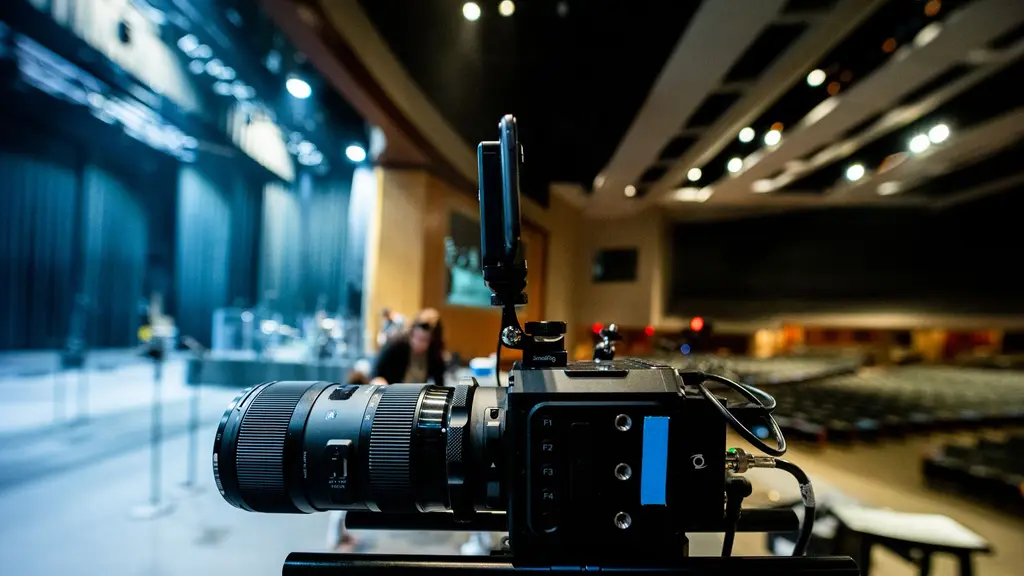
When you remove editorial safety nets, the entire crew has to function like a pit crew in Formula 1. The focus puller cannot afford a single soft frame when an actor shifts weight unexpectedly. The sound recordist has to manage booms and wireless transmitters across complex multi-room blocking while hiding from reflective surfaces like mirrors and windows.
If someone misses a cue twenty-five minutes into a thirty-minute take, the director calls cut, and the entire crew resets from the top.
Day 1 of 12
In Scriptory: Shooting Schedule
Groups scenes into location blocks and packs them into shoot days by eighths. Plain arithmetic over the script — no AI, so you can check it by hand.
Where: Editor — Schedule tab
Achieving this uninterrupted flow requires intense coordination between the camera operator carrying an Arri Alexa Mini LF on a Trinity rig, the lighting technicians operating wireless DMX dimmers to adjust exposure as actors walk from sunlit hallways into shadowy interiors, and the script supervisor tracking dialogue timing to ensure the pace matches the blocking maps. A single dropped frame on a wireless video village monitor can mean the difference between locking a historic take and throwing away half a million dollars of production time. Every department head must know the physical floor plan by heart, treating the entire soundstage or practical location as a live theatrical stage where there are no second chances, no pickup shots, and no digital safety nets to rescue a missed cue during the final mix.
This level of ambition requires exhaustive pre-production planning. You cannot improvise camera paths on the day when thirty people need to move through tight practical locations without tripping over C-stands or stepping on lighting cables. Every single story beat must be mapped to exact footages and second-counts weeks before cameras roll.
Long-Take Shoot Requirements
0% CompleteProduction designers spend weeks reinforcing walls so they can swing out on silent hinges when the camera passes through tight doorways, ensuring the operator never bumps a lens. Wardrobe departments stitch hidden microphone pouches into actor costumes to prevent rustling noise during long physical takes, while stunt coordinators double-check every spatial movement so that actors never block the operator's line of sight during pivotal emotional exchanges. Without this microscopic level of pre-planning, the entire enterprise collapses under the sheer weight of its own technical ambition.
Why you can't look away#
We are conditioned as viewers to accept edits as natural punctuation marks. A cut tells us when to feel relief, when to process information, and when we can safely check our phones for ten seconds. Adolescence systematically dismantles that comfort.
Scriptory Resource
Plan your complex scenes before you shoot
Scriptory helps you organize your shot lists, schedules, and blocking right inside your workspace.
When you watch the finale, your brain keeps waiting for the cut that never arrives. That structural tension creates a physical reaction. You lean forward. You hold your breath during long pauses. You become hyper-aware of the silence in the room.
That unbroken gaze turns passive viewing into an active confrontation. You are locked in the room with a grieving father and a broken boy, and the production gives you no place to hide. That is the true power of the format: it forces you to witness the unvarnished truth of a tragedy without letting editing soften the blow.
What to do next#
Take a look at your own current writing project and examine where you rely on edits to rescue weak scenes or cover up lazy pacing. If you had to shoot your next dramatic sequence in one unbroken five-page run, would the dialogue hold up under that kind of relentless scrutiny? Open your script, strip out the camera directions, and read the raw exchange aloud in real time. If the scene drags when nobody can hide behind a cut, rewrite it until it stands on its own two feet.
Frequently Asked Questions
Quick answers to what people ask about this topic.
Did Jamie kill Katie in Adolescence?
Yes, the finale makes it clear that Jamie killed Katie. The ambiguity surrounding the ending is psychological rather than factual. The series is less interested in confirming his guilt than in examining how a thirteen-year-old boy became capable of committing such violence.
What does the ending of Adolescence mean?
The ending argues that tragedies like this do not emerge from a single cause. The series connects online radicalisation, emotional isolation, shame, and parental blindness. Its deliberate refusal of catharsis forces the audience to sit with that complex reality instead of finding an easy escape.
Why was Adolescence filmed in one take?
The one-take structure restricts the audience's ability to look away from uncomfortable truths. Without editing to offer emotional distance or release tension, scenes unfold in real time, making the form and the subject matter entirely inseparable.
Is there a Season 2 of Adolescence?
Netflix has not officially announced a second season of Adolescence at the time of writing. The series is structured as a complete standalone story, and its intentionally unresolved ending functions as a definitive conclusion rather than a setup for a sequel.
Format your script for free
Stop fighting Word margins. Scriptory formats your screenplay to industry standard as you type, then turns it into a breakdown, a schedule and a call sheet.
Open Scriptory Now