Key Takeaways
- Audition slots for each performer should be scheduled in 15 to 20 minute increments.
- Producers should contact the Screen Actors Guild at least 6 weeks before auditions to complete signatory paperwork.
- Filmmakers should avoid holding auditions in residential homes to maintain professional credibility.
- The first audition take should always be allowed to run uninterrupted without director intervention.
Running independent film auditions requires treating actors with professional theater-standard rigor rather than casual DIY chaos, even on zero budget. You have been on set when the schedule falls apart at 4 PM, and you know that administrative disarray upstream always metastasizes into creative disaster on the floor. If your casting process looks like an improvised garage sale, do not be surprised when your actors treat the call time as a loose suggestion. You need a structured protocol.
The Scoop on Auditions#
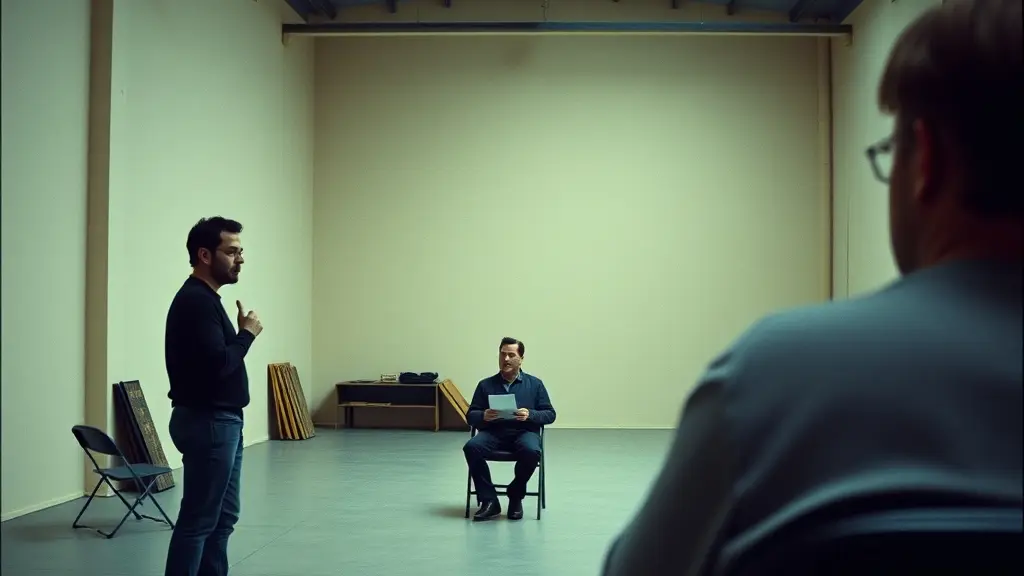
The audition room sets the tone for your entire production. When an actor walks into a space that runs on time, features clear sides, and respects their preparation, they bring their best work. When they walk into a room where producers are shouting across the table and eating lunch off paper plates, you communicate that nobody takes the material seriously. Treat the audition process with the same exact discipline you bring to the lighting setup or the sound roll.
You need to know how you are sourcing talent before you book a single room. For independent film, standard industry casting platforms include Backstage and LA Casting, alongside Breakdown Services for commercial and larger indie projects. These portals get your character descriptions in front of agents, managers, and independent performers who check notices daily. Do not rely on personal favors or a hurried post on social media. Put your project where working actors look for work, and you will get working professionals through your door. To build a truly formidable ensemble, you must cast a wide net across regional talent pools while simultaneously courting recognizable indie film veterans who can anchor your dramatic narrative.
When searching for talent, invest time in looking beyond the primary metropolitan hubs. Regional theater companies, university acting programs, and local fringe festivals harbor exceptional actors who may not have high-profile agency representation yet. Reviewing reel footage on actors' personal websites or Vimeo channels helps you evaluate their camera technique, while checking their theatrical resume confirms their ability to sustain a character arc across a complete narrative. By combining regional discoveries with seasoned indie professionals, you assemble a well-rounded cast that elevates every scene in your screenplay.
Camera
Ritu Bhalla
Casting Director
Direction
Sameer Khan
Producer
Art
Anjali Rao
Production Designer
In Scriptory: Crew & Cast Directory
Every number on the production in one place, grouped by department, exportable to CSV for the people who still want a printout.
Where: Editor — Contacts tab
Start With A Script Breakdown#
Before you can cast anyone, you have to know who is actually in your screenplay. A script breakdown is the foundational document where you pull every character, speaking part, prop, and location straight off the page. Start with the lead roles that carry the narrative weight, then move through every supporting part with a single line. Do not trust your memory. A missed background officer or a forgotten cameo role discovered three days before principal photography will blow your budget wide open.
When you break down the script, tag every character attribute explicitly. If a scene requires an actor to play guitar or speak fluent Spanish, note it immediately so your casting notices reflect reality. You can handle this manually with colored highlighters, or you can streamline the process by pulling data straight from your digital draft. Nothing wastes talent more than calling in an actor for a physical comedy role who has zero stage movement experience. Meticulous preparation here pays massive dividends on set.
A comprehensive breakdown also identifies logistical bottlenecks before you ever step foot in an audition room. For instance, if Scene 4 requires a character to handle a specialized antique prop or perform complex stage combat, your casting notice must explicitly ask whether the performer has prior stunt training or prop handling experience. Tracking wardrobe requirements during the script breakdown stage prevents continuity errors during principal photography and ensures you aren't scrambling to source specialized costumes at the eleventh hour.
NIGHT SHIFT AUDITIONS — one document, every format a producer, a festival or a competitor's software will ask for.
Submission
FDX
Final Draft
FOUNTAIN
Plain text
DOCX
Word
TXT
Anything
In Scriptory: Import & Export
Reads .fdx, .fountain, .docx, .pdf and .txt; writes PDF, DOCX, Final Draft, Fountain and plain text at industry indents.
Where: Editor — File menu
Create A Casting Breakdown#
Your casting breakdown is your public-facing pitch to the talent pool. It needs to be precise, enticing, and brutally honest about what the role demands. A weak character description generates hundreds of mismatched submissions that will clog your inbox and waste your afternoon. Detail the age range, the emotional arc, and any specialized physical skills required for the part.
Take the model established by the feature film A Woman Undone. Their SAG-AFTRA Low Budget casting notice detailed executive producers, exact shoot dates, pay scales, and precise character notes so agents knew instantly whether their client fit the profile. For instance, if your character is an overworked accountant who breaks into a monologue about tax fraud, state that clearly. Give the actor enough raw material to make a strong, specific choice before they ever step foot near your audition space. Writers spend months crafting dialogue, yet producers routinely spend mere minutes dashing off vague character descriptions that leave actors guessing about core motivations and backstory.
Crafting a standout casting notice involves outlining the character's internal conflict alongside their external traits. Instead of merely stating that a character is "angry," describe the specific betrayal or grievance that fuels their resentment. When agents and managers read a notice that provides psychological depth alongside logistical details like shoot locations and daily stipends, they submit clients who genuinely understand the material, reducing the number of inappropriate auditions you have to sit through.
Post Your Casting Call Notice#
Once your breakdown is locked, you need to publish your casting call notice through the proper channels. If you are mounting a union production, you must contact the Screen Actors Guild at least six weeks before auditions to become signatory. SAG-AFTRA provides Ultra Low Budget and New Media contracts designed specifically for independent filmmakers, making it entirely feasible to hire union talent without destroying your financing plan.
Your notice must include the production title, the medium, executive producers, director, shoot dates, location, and the exact pay rate. If you are non-union, state the exact deferred or flat indie stipend up front. Do not hide compensation details in vague language. Working actors respect transparency, and setting clear financial expectations weeds out performers who cannot commit to your rate before you waste hours in the room.
Timing your casting notice publication correctly is critical for attracting top-tier talent. Publishing a notice on a Friday afternoon often means it gets buried under a weekend backlog of submissions, whereas posting on a Tuesday morning ensures maximum visibility when agents and casting directors are actively checking boards. Additionally, give talent at least five to seven business days to submit self-tapes or request in-person appointment slots, as rushing the submission window will only yield a panicked, unpolished pool of applicants.
Find The Perfect Audition Space#
Never hold auditions in a residential home or apartment. It looks deeply unprofessional, it raises legitimate safety concerns for talent, and it signals that you do not separate your personal life from your business. Rent a proper conference room, an empty theater, or a rehearsal studio. Many local spaces offer day rates that fit comfortably inside a micro-budget.
You must schedule audition slots in 15 to 20 minute increments per performer. This gives the actor enough time to walk in, slate, perform the scene, take an adjustment, and ask questions without feeling rushed out the door. Always build in a hard break for lunch where no actors are called. John Swanbeck, noted film director, frequently stresses that directors must create a calm, focused environment where actors feel safe enough to take bold risks during their audition. Never compromise on environmental professionalism.
When selecting a physical room, evaluate its acoustic properties and proximity to street noise. A space located directly next to a busy construction site or a noisy subway line will make it impossible to properly evaluate an actor's vocal projection and emotional nuance on your recording playback. Ensure the room features adequate lighting, comfortable seating for both the creative team and the auditioning actor, and a private holding area where performers can review their sides without overhearing the actors currently reading in the main space.
Watch your lunch habits
Organize Your Roster And Contact Sheet#
Managing a hundred actors requires ruthless administrative organization. Build a master roster that tracks every performer by character, appointment time, contact email, and representation. When callbacks roll around, you cannot afford to be digging through random email threads to find out who played the detective versus who played the bartender.
Keep your roster updated in real-time as actors confirm or cancel their slots. A clean contact sheet allows your producer, director, and casting assistant to stay completely synchronized on the day. If an actor cancels at the two o'clock hour, your assistant needs to pull the next available submission off your standby list instantly to keep the room moving without dead air. Without this tracking framework, chaos ensues.
Utilizing cloud-based spreadsheet tools like Google Sheets or specialized casting management software allows your entire production team to access the master roster simultaneously across multiple devices. Color-code your roster rows to instantly distinguish confirmed attendees from cancellations, and include direct links to actors' online demo reels and digital headshots. This ensures that when a producer asks about a specific performer's prior credits during a mid-day deliberation break, the information is instantly accessible within two clicks.
Keep Track Of Talent With Sign-In Sheets#
Every single person who walks through your door must sign in. An audition sign-in sheet is non-negotiable for tracking attendance, verifying legal names, and updating your permanent production directory. If you are running a union shoot, you must use a standard SAG commercial sign-ion sheet, which is formally known as an Exhibit E.
For non-union indie projects, a streamlined custom sign-in sheet captures arrival times and contact details for your permanent records. This document also protects you legally by confirming that talent acknowledged their presence and agreed to your audition terms. Keep these sheets filed securely alongside your daily call sheets once pre-production wraps. Accountability matters.
Having an organized sign-in table also sets a welcoming tone for the room. Station a friendly casting assistant at the entrance with clipboards, pens, and printed physical copies of the sides, ensuring actors never have to wander around looking for materials. Collecting emergency contact information on these sign-in sheets serves as an essential safety protocol, ensuring you have immediate access to next-of-kin details if a performer experiences a medical emergency while on the premises.
Maintain Records With A Casting Sheet#
An audition sign-in sheet tracks who showed up; a casting sheet tracks what they actually did. As the director and producer watch each performance, keep a dedicated casting sheet open to log physical descriptions, unique quirks, vocal qualities, and direct performance notes. Your memory will fail you after the twelfth actor reads the exact same scene.
Note whether the performer took adjustments well or if they locked up on the second take. Record their specific energy level and how they matched with your reader. When you sit down to deliberate with your creative team after long hours of watching performers, these specific notes will separate the memorable auditions from the blur of faces. Precision here dictates ultimate casting success.
Design your casting sheet to include a standardized numerical scoring system alongside qualitative commentary sections. For instance, you might rate performers on a scale of one to five for emotional range, comedic timing, physical presence, and chemistry with the reader. When you have seen forty actors for a single supporting role, reviewing a clean spreadsheet of quantitative scores paired with specific qualitative notes allows you and your producer to objectively narrow down your callback list without relying purely on subjective gut feelings.
Script Out Your Audition Introduction#
The moment an actor enters the room, the tension is palpable. Script out your own opening remarks so you remain neutral, dispassionate, and welcoming. Do not ask actors to recite lengthy mini-bios or explain why they became an actor, as this kills room momentum and exhausts performers who just want to do their job.
Keep your greeting brief: welcome them, confirm they have their sides, ask if they have any questions about the character, and let them know when you are ready to start. Your job is to create an oasis of calm where the actor can drop their nerves and inhabit the text. Professionalism breeds confidence, and confidence yields a fearless performance. Setting boundaries early keeps everyone focused.
When addressing the actor, avoid making overly familiar small talk about the weather or traffic delays, as this often forces the performer to perform social pleasantries when they should be conserving their emotional energy for the scene. Instead, establish an immediate working atmosphere by introducing everyone in the room by name and title, confirming they feel comfortable with the lighting and spatial arrangement, and offering them a glass of water before inviting them to take their mark on the floor.
Audition Room Protocol
- 1
Welcome the actor
Keep your greeting warm, brief, and entirely neutral.
- 2
Check the sides
Confirm they had time to review the material provided.
- 3
Run the first take
Let them complete their entire performance without interruption.
- 4
Give one adjustment
Test their range and responsiveness to direction.
Manage Headshots And Resumes#
Every actor must bring or submit a professional physical headshot and resume to verify they fit the character's physical description and experience level. Staple the resume to the back of the 8x10 headshot so your casting notes can be written directly on the blank space or margin during their read.
Check their resume for actual credits and training, but do not dismiss newer talent who show raw instinct on tape. If an actor shows up without a headshot or resume, it is an immediate red flag regarding their professional preparedness. Insist on physical copies so your entire creative team can review options side-by-side on a corkboard during deliberations. Physical materials retain utility.
When evaluating resumes, look for specialized training institutions, conservatory backgrounds, and sustained theater experience rather than just television guest spots. A solid theatrical foundation usually indicates an actor who knows how to memorize heavy dialogue, sustain emotional stamina across long takes, and take physical direction without losing focus. Always ensure that headshots accurately reflect the actor's current hairstyle, facial hair, and overall appearance so you don't encounter unpleasant surprises on the first day of principal photography.
Capture The Actor Slate#
Before the scene begins, record the actor slate. The slate is where the performer looks directly into the lens, states their name, represents agency if applicable, and turns left and right for profile shots. Keep the camera rolling, and make sure your reader is positioned just off-camera so the actor's eye-line remains natural.
Never interrupt an actor's very first take instead of letting them complete their initial performance. Even if they stumble on the first line or take a strange interpretive angle, let them ride the wave of that first run-through all the way to the end. You can always give an adjustment on the second take, but cutting them off mid-sentence destroys their focus and ruins the audition tape. Patience wins.
Ensure your camera operator uses a tripod and maintains a stable medium-close framing during the slate and performance, avoiding handheld camera shake that distracts from the actor's facial expressions. Instruct your reader to speak at a consistent, moderate volume that does not overpower the auditioning performer on the microphone recording. Reviewing the slate recording immediately after the actor leaves the room ensures you didn't capture corrupted video files or muffled audio tracks due to technical equipment failure.
Analyze, Comment, And Direct Talent#
Once the initial take is in the can, give the actor one clear, actionable adjustment. Ask them to lower the stakes, increase the urgency, or play the scene as though they are hiding a secret. This separates actors who can take dynamic direction from those who only have one memorized gear.
Scriptory Resource
Tag your script instead of retyping it
Scriptory pulls props, cast and locations straight off the page.
Watch how they respond to notes. A great actor will fold your direction into their performance instantly, transforming the character in front of your eyes. Take your final notes, thank them for their time, and let them exit the room feeling valued. The audition process is your first real day of collaboration, so build a foundation of mutual respect that will carry all the way through to final wrap.
When delivering your adjustment, frame your note using active verbs and objective-based language rather than abstract emotional commands. Instead of telling a performer to "look more sad," instruct them to "find a way to keep talking even though your character is fighting back tears." This gives the actor a tangible physical action to execute, allowing their natural emotional life to emerge organically rather than forcing a manufactured performance that looks unconvincing on camera.
Frequently Asked Questions
Quick answers to what people ask about this topic.
Where should independent filmmakers hold auditions?
Independent filmmakers should rent commercial spaces such as empty theaters, conference rooms, or peer-to-peer venue rentals like Peerspace. Avoid holding auditions in residential homes or apartments, as this appears unprofessional and can deter high-level talent from attending.
What is the difference between a casting sheet and a sign-in sheet?
A sign-in sheet is a scheduling and legal tracking tool used to log arrival times and contact details for every actor who enters the room. A casting sheet is an internal evaluation document used by directors and producers to record physical traits, performance notes, and decisions during the audition.
How far in advance should you contact SAG-AFTRA for a union indie film?
Independent producers should contact the Screen Actors Guild at least six weeks before holding auditions to become a signatory. This ensures proper clearance for Ultra Low Budget or New Media contracts before seeing union talent.
Should directors interrupt an actor during their first audition take?
Directors should never interrupt an actor during their first take. Allow the performer to complete an uninterrupted performance to judge their baseline interpretation before offering brief, succinct direction for a second take.
Format your script for free
Stop fighting Word margins. Scriptory formats your screenplay to industry standard as you type, then turns it into a breakdown, a schedule and a call sheet.
Open Scriptory Now