Key Takeaways
- A standard film turnaround rule requires at least 12 hours of rest between wrap and the next call time.
- Scheduling an easy scene or establishing shot first proves to the crew that an early call time was justified.
- Placing MOS scenes at the very beginning or end of a day prevents the sound crew from standing around idle.
- Night shoots should always be placed immediately before a scheduled day off to maintain crew health and union compliance.
You are standing in a damp alleyway behind a commercial kitchen in Queens at 5:15 AM, watching your tired first assistant director try to figure out why the gaffer is staring at a blank iPad. The script pages in your pocket say you have six pages to shoot today across four locations. The scheduling software promised you a clean, mathematically optimal run. But the software has never stood in an alleyway in the freezing rain while an actor vomits from a bad gas station burrito.
Film production software can juggle your cast, crew, and locations until the database looks like a work of art. Yet real indie film sets do not run on database logic. They run on human fatigue, coffee temperature, and the quiet realization that your lead actor has hit a wall by lunch. If you build your shooting schedule purely around digital efficiency without accounting for the fragile ecosystem of a film crew, your schedule will implode before the first week wraps.
We need to build schedules that respect human limits. A standard independent film shoot day covers roughly 4 to 8 pages of script, or 32 to 64 eighths, but getting through those pages requires momentum rather than brutal force. Here are ten pro tips drawn from actual set scars to help you structure a shooting schedule that keeps your crew alive and your footage in the can.
Prioritize Easy Scenes to Start the Day#
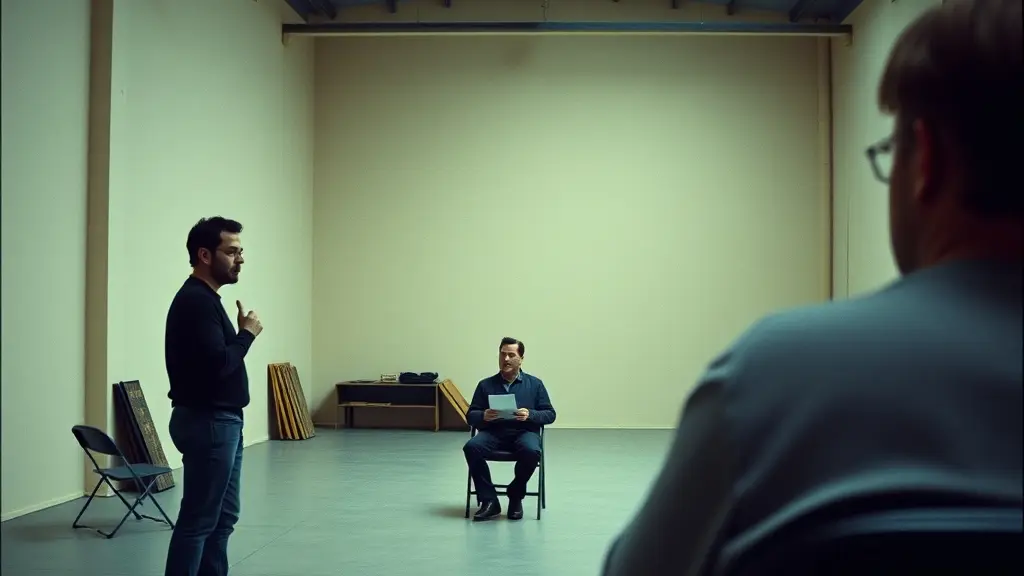
Do not drop your lead actor into an emotionally devastating, five-page crying monologue at 8:00 AM on day one. Everyone is still figuring out where the C-stands are stored and whether the craft service coffee is drinkable. If you demand peak psychological performance before the crew has even found their physical rhythm on set, you will burn your cast out and blow your morning window on false starts.
Instead, start the day with an easy setup that lets the department heads calibrate. An establishing exterior, a simple silent insert, or a low-stakes conversation where the actors are simply walking and talking gives everyone a gentle ramp-up. You want a quick win before lunch so the team feels the tangible weight of progress.
Day 1 of 12
In Scriptory: Shooting Schedule
Groups scenes into location blocks and packs them into shoot days by eighths. Plain arithmetic over the script — no AI, so you can check it by hand.
Where: Editor — Schedule tab
When you sequence your strips on the digital stripboard—the color-coded visual representation of your shooting days—placing a frictionless scene first acts as a warmup lap. A crew that gets a camera rolling smoothly within forty minutes of call time approaches the rest of the day with entirely different posture than one that spends two hours troubleshooting a complex crane shot right out of the gate.
Consider Actor Fatigue, Not Just Logistics#
The stripboard loves putting all scenes in the same room on the same day because it saves moving the truck. Your production manager will smile at the math. But if your lead actor has twenty dialogue-heavy setups in that living room across a twelve-hour block, their performance by scene fifteen will be flat, exhausted, and unusable.
Logistics are easy to manage; human stamina is finite. If a performer is carrying emotional heavy lifting across multiple demanding scenes, you must distribute that load across the week. Give them breathing room. Break up dialogue-dense interior days with lighter B-roll or supporting character scenes. If you ignore actor fatigue in favor of saving fifty dollars in van rental fees, you will pay for it in expensive ADR sessions and lifeless line readings during the edit.
Schedule Chronologically Whenever Possible#
Everyone in independent film treats out-of-order shooting as a religion. We shoot the ending on day two because the location owner is only available then, and we cross our fingers that the lead actor remembers whether they are supposed to be angry or relieved. But whenever your budget, locations, and actor availability allow it, try to shoot chronologically.
Chronological scheduling transforms how actors inhabit their characters. When an actor can physically trace the emotional arc of the script day by day through actual production order, the performance gains an organic weight that no amount of prep-room cajoling can replicate. It also simplifies continuity enormously; wardrobe supervisors and makeup artists stop losing their minds over subtle changes in injury staging or hair length.
Christopher Nolan’s early micro-budget feature Following relied on strict chronological scheduling and intense logistical discipline because the cast and crew had day jobs and could only shoot on weekends. While narrative features rarely have that luxury today, looking for blocks of chronological storytelling within your schedule yields massive creative dividends.
Plan for Unpredictable Weather and Alternate Days#
Your scheduling software cannot look at a meteorological radar. If you leave all your exterior scenes for the final week of production because they look pretty in the script, you are inviting a disaster that no insurance policy can fully cure. When an unexpected three-day downpour hits your final week, you have zero buffer days left to absorb the delay.
Schedule outdoor exterior scenes as early in the production schedule as humanly possible. If it rains on day three, you shift the exterior to next week and pull an interior day forward. You maintain your momentum instead of scrambling for permits and renegotiating location contracts while your daily burn rate bleeds your bank account dry. Always have an indoor coverage plan ready to deploy the second the skies open up.
Alternate Between Complex and Quick Wins#
If your shooting schedule packs three master-level stunts, a complex tracking shot, and a five-way argument into a single Tuesday, your crew will crawl home broken. Momentum is maintained through rhythm, not punishment. You need to alternate between complex technical setups and straightforward dialogue scenes to keep the energy humming.
Think of your day as a series of peaks and valleys. After your gaffer and grip departments spend four hours rigging overhead diffusion for a massive night exterior, reward them with a simple two-shot against a practical wall where you just pop a single 2K Fresnel through a window. That alternation gives specialty crews the breathing room to strike and reset gear without working in a state of continuous panic.
Maximize Second Unit Efficiency for B-Roll#
You do not need to drag your entire primary cast and main unit crew across town to pick up three seconds of a car driving past a stop sign. That is what a second unit is for. Deploying a lean, two-person second-unit camera team during primary unit meal breaks or while the main crew is lighting a massive interior setup is one of the few ways to claw back hidden time in a tight indie schedule.
Low-budget features routinely rely on parallel second-unit shooting for insert shots, environmental details, and establishing b-roll to maximize the value of short-term equipment rentals. While the director and cinematographer are locked inside a bedroom blocking a delicate emotional scene, your second-unit shooter can grab texture shots in the hallway, ensuring the editing bay has the connective tissue it needs without costing you main unit hours.
Be Strategic with MOS Scenes#
There is an expensive habit in indie filmmaking of calling the entire sound department at 6:00 AM, feeding them breakfast, and making them stand around for three hours because the opening setup is a visual montage with no spoken dialogue. That is a waste of your daily budget and a quick way to breed resentment among your crew.
MOS
Mit Out Sound — filming without recording synchronous audio, saving sound crew setup time when dialogue is absent.
An MOS scene requires no synchronous audio recording, meaning your production sound mixer and boom operator are entirely unnecessary for those specific setups.
When planning your production blocks, it pays to remember how modern tools streamline preparation. Directors and producers spend countless hours manually extracting requirements from script pages, but automation has evolved significantly over recent years.
Smart software now parses scene breakdowns instantly, mapping out props, cast members, and logistical needs before a single call sheet is ever generated.
Scriptory Resource
Tag your script instead of retyping it
Scriptory pulls props, cast and locations straight off the page.
When building your call sheets, isolate these silent setups at the absolute beginning or the absolute end of the shooting day. This allows your sound team to stagger their arrival times—reporting two hours after crew call—or leave early once their dialogue work is finished, keeping morale high and payroll efficient.
Set Milestone Accomplishments Across the Shoot#
A twenty-day indie shoot is a grueling marathon where morale reliably dips around day ten. The initial excitement of the first-day crew enthusiasm has worn off, wrap is two weeks away, and everyone is tired. You cannot rely on caffeine alone to drag the team across the finish line; you have to engineer psychological milestones into the calendar.
Space your big set pieces, complex stunts, or major emotional turning points deliberately across the schedule rather than front-loading or back-loading them all. When the crew achieves a massive, complicated sequence and sees it come together on the monitor, that collective victory creates a surge of belief in the project. Feed that energy back to them through deliberate pacing.
Help Every Department Feel Appreciated#
A schedule that only serves the camera department while treating the art department and wardrobe like second-class citizens will lead to missed details and sloppy resets. Every single department on set needs a moment in the sun where their work is given the time it deserves to look exceptional.
Can you structure a day where the production design gets a glorious wide shot to showcase their hard work, followed by a sequence where the sound recordist gets to capture pristine ambient textures, followed by a brilliant lighting setup for the DP? When artisans see that the schedule respects the craft of their specific department, they stop cutting corners and start bringing creative solutions to your problems.
Schedule Night Shoots Before Days Off#
Nothing destroys a film crew faster than a rotating sleep schedule that ignores human biology. If you schedule a brutal twelve-hour overnight exterior shoot from 6:00 PM to 6:00 AM, and then expect your crew to show up for a normal 7:00 AM day shoot the following morning, you are violating basic safety standards and human endurance limits.
Standard union rules such as SAG guidelines require a strict 12-hour rest period from wrap to the next day's call time, and for good reason. On independent non-union sets, ignoring this turnaround rule leads to exhausted drivers falling asleep at the wheel on the morning commute home. Always anchor your night shoots immediately before a scheduled day off, giving everyone the necessary recovery window to reset their circadian rhythms safely.
- Standard Day Length
- 10 to 12 hours
- Target Page Count
- 4 to 8 pages per day
- Minimum Turnaround
- 12 hours rest from wrap to call
- Second Unit Purpose
- B-roll, inserts, and parallel coverage
Build the Machine That Serves the Humans#
Your shooting schedule is not a spreadsheet exercise to be completed in isolation and handed down from an ivory tower. It is the operating system of your production. When you build it around human fatigue, department rhythms, and natural momentum rather than rigid software automation, everything changes. The crew stops watching the clock, the actors find space to breathe into their characters, and the footage coming back to the card starts looking like the movie you actually set out to make. Take your stripboard, look past the math, and build a rhythm that lets your people win.
Frequently Asked Questions
Quick answers to what people ask about this topic.
What does MOS mean on a shooting schedule?
MOS stands for 'Mit Out Sound' (or motor-only sync), meaning footage is recorded without synchronous audio. Scheduling MOS scenes at the very beginning or end of a shoot day allows the sound recordist to arrive later or depart early.
Why should you start a film shoot day with an easy scene?
Starting the day with an easy setup, b-roll, or an establishing shot builds early momentum and rewards the crew for an early call time. It gets a quick win in the can before tackling complex dramatic sequences.
How do you schedule night shoots safely on an independent film?
Night shoots should always be scheduled immediately before a planned day off. This prevents violating mandatory turnaround time rules and gives the cast and crew adequate time to reset their sleep schedules.
What is the best way to handle weather delays in a shooting schedule?
Schedule exterior outdoor scenes earlier in your production timeline so you have remaining buffer days to reschedule if bad weather hits. Always have an indoor backup scene or covered alternative ready to pivot instantly.
Filed Under
Format your script for free
Stop fighting Word margins. Scriptory formats your screenplay to industry standard as you type, then turns it into a breakdown, a schedule and a call sheet.
Open Scriptory Now